My Visit to an Essential Oil Distillery in Grasse
This summer I was back in Grasse in the South of France, the perfume capital of the world, and I finally got to do something that has been on my wish list for a very long time. I visited an essential oil distillery!
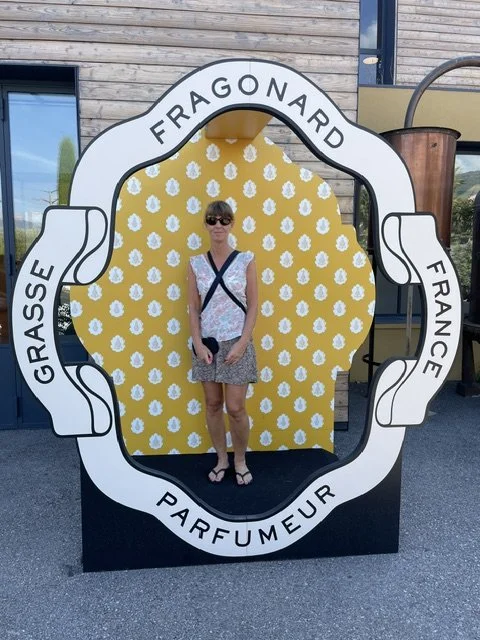
I have been to Grasse before, but somehow I never managed to see where the magic actually happens. So this time I made sure it was at the top of my list.
As you may know, I only use essential oils to fragrance my soaps. Seeing how they are made, right at the start of their journey, was something I had wanted to experience for years. And I have to say it did not disappoint.
Why Is Grasse the Perfume Capital of the World?
Grasse is a small hilltop town not far from Nice, and it has been at the heart of the perfume world for centuries.
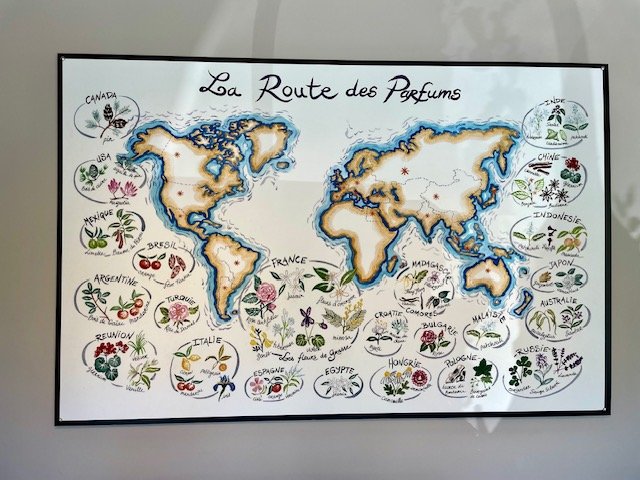
The mild climate is perfect for growing fragrant flowers, and Grasse is still famous for its jasmine, its May roses and its tuberose. Over the years the town became home to many perfume houses and distilleries, turning these beautiful flowers into fragrances loved all over the world.
In 2018 the perfume know-how of the Grasse region was even recognised by UNESCO as part of the world's cultural heritage. Not bad for a little town in the hills!
Copper Stills and How Essential Oils Are Made
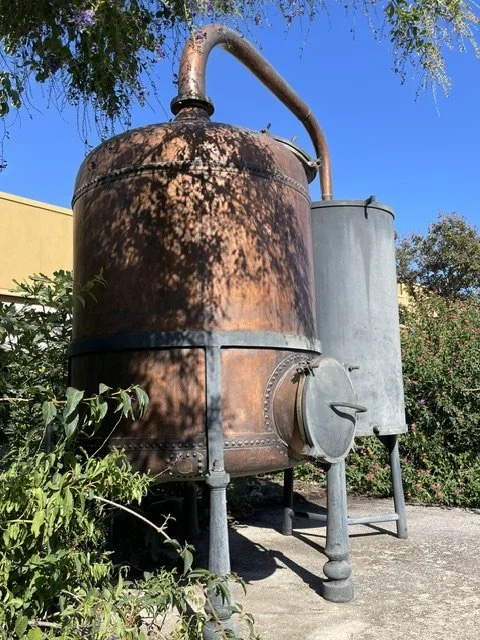
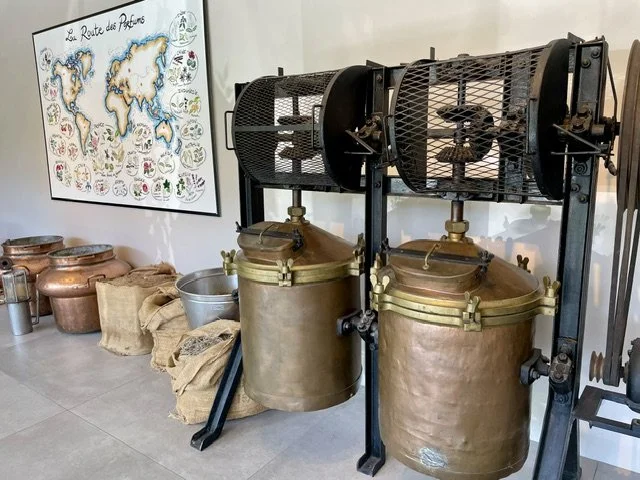
I think the copper stills were my favourite part of the whole visit. They were absolutely stunning, gleaming away and looking like something out of an old alchemist's workshop. Copper has been used for stills for hundreds of years because it conducts heat so well.
Distillation itself is an ancient art, but it was scholars of the Arab and Islamic world who really perfected it. In the 9th century the Arab philosopher al-Kindi wrote a whole book on perfumes and distillation, with recipes for fragrant waters and oils.
A little later, the Persian physician Avicenna (Ibn Sina) refined the process further and is often credited with distilling the first true rose oil and rose water. Their knowledge eventually spread to Europe, and the stills I saw in Grasse are the descendants of those early designs.
Most essential oils are made by steam distillation, and the process is surprisingly simple when you see it in action. Steam is passed through the plant material, and it carries the tiny droplets of aromatic oil away with it.
The steam then travels through a cooling coil, where it turns back into liquid. This liquid collects in a special vessel, and because oil and water don't mix, the essential oil separates out and can be collected. The fragrant water left behind is known as a hydrosol or floral water, which is lovely in its own right.
What really struck me is just how much plant material it takes to make a small amount of essential oil. It certainly makes you appreciate every single drop!
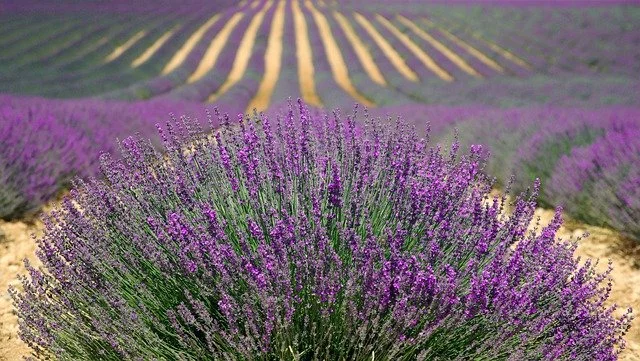
Lavender is a wonderful example of how much goes into every bottle. Only around 0.5 to 1% of the weight of the flowers ends up as essential oil, so it takes roughly 100 to 200 kilos of lavender flowers to make just one kilo of oil. Even a little 10ml bottle needs somewhere between one and two kilos of flowers!
Interestingly, much of the lavender grown in the South of France today is actually lavandin, a hardier cross between true lavender and spike lavender that produces far more oil. Its scent is stronger and sharper, while true lavender, which grows at higher altitudes, has a sweeter, more delicate fragrance and costs considerably more.
From Grasse to Using Essential Oil in My Soap
I love flowers and plants, so essential oils have always been the obvious choice for adding a fragrance to my soap. They are the only way to add a natural fragrance, and you can read more about why I love them in my blog on Essential Oil Benefits.
Seeing the whole process with my own eyes has given me an even deeper respect for these precious oils. When I add them to a batch of soap now, I will be picturing those copper stills and all the plants that went into every little bottle.
It has also reminded me how important it is to choose essential oils carefully. Not all of them are suitable for soap, and I have written about the essential oils to avoid in cold process soap if you would like to find out more.
It was a truly memorable visit, and I came home feeling very inspired. I think Grasse may have to become a regular trip!
If you would like to learn how to make your own natural soap fragranced with essential oils, please take a look at my soap making classes. I would love to help get you started on your soap making journey.